
It’s one of the first questions almost every learner asks, and it’s a fair one. Lessons cost time and money, and nobody wants to book more than they need, or fewer than it takes to actually feel safe behind the wheel.
The honest answer is that there’s no single number that works for everyone. How many lessons you need depends on your previous experience, how confident you are, how well you control the car, how well you understand the road rules, where you’re driving, whether you’re learning in a manual or automatic, how often you practice, and how ready you are to handle test maneuvers under pressure.
This guide walks through what actually affects lesson numbers, how manual and automatic learning compares, and how to tell when you’re genuinely ready for your test rather than just hoping a certain lesson count will get you there.
How Many Driving Lessons Does the Average Learner Need?
Learners progress at very different speeds, and that’s completely normal. Someone who’s already spent time driving on a farm, in a car park, or with a confident parent will usually need fewer professional lessons than someone starting from scratch. Age, natural coordination, nerves, and how often they get behind the wheel between lessons all play a part too.
It helps to understand the difference between a few related things:
- Professional lessons: structured sessions with a qualified instructor, focused on correcting habits and building specific skills
- Private practice: supervised driving with a parent, guardian, or another eligible supervising driver, used to build up hours and confidence
- Supervised driving: any driving completed with a supervisor present, as required during your learner period
- Test preparation: lessons or practice sessions specifically focused on the maneuvers and conditions used in the actual test
No responsible driving school can promise that a set number of lessons guarantees a pass. What matters far more than hitting a specific number is whether your skills are actually developing smoother control, better observation, and more consistent decision-making session after session.
What Determines How Many Driving Lessons You Need?
A number of factors shape how quickly you’ll be ready:
- Previous driving experience: any prior time behind the wheel, even informal, can shorten the learning curve
- Age and confidence: some learners pick up physical car control quickly but need more time to feel calm in traffic, and vice versa
- Understanding of road rules: knowing the rules in theory doesn’t always translate to applying them instinctively while driving
- Vehicle control: steering, braking, and accelerating smoothly rather than reactively
- Traffic awareness: reading what other drivers are doing and reacting early
- Observation skills: checking mirrors, blind spots, and surroundings consistently
- Parking ability: including reverse parking and parallel parking
- Lane changing: merging and changing lanes safely and with proper signalling
- Roundabout skills: correct lane positioning, signalling, and giving way
- Intersections: judging gaps, right-of-way, and safe timing
- Speed management: matching speed to conditions, not just the speed limit
- Hazard perception: spotting potential risks before they become a problem
- Driving in different conditions: wet roads, night driving, heavier traffic
- Test preparation: familiarity with the exact maneuvers and format used on test day
The more of these areas you’ve genuinely mastered, the fewer lessons you’re likely to need going forward.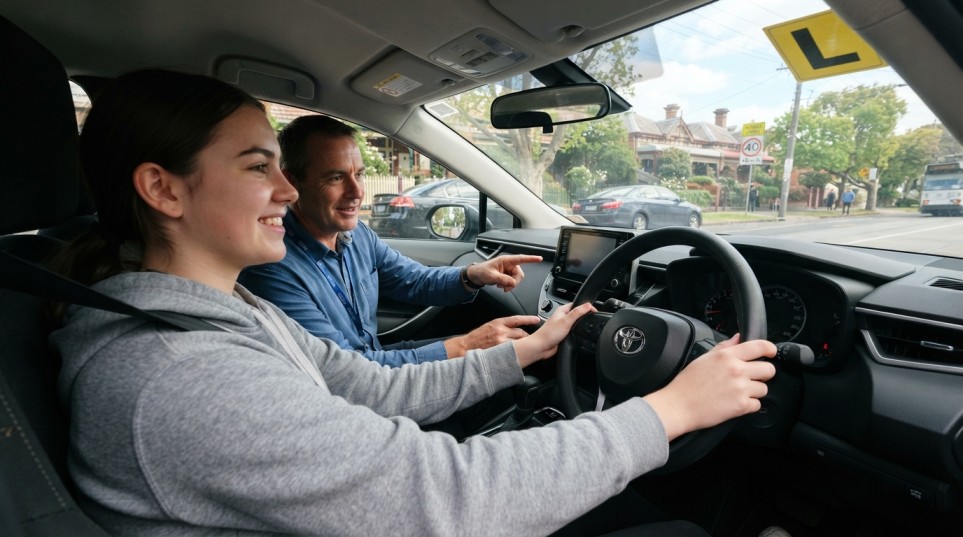
Manual vs Automatic Driving Lessons: What’s the Difference?
The core difference comes down to how much the learner has to manage at once.
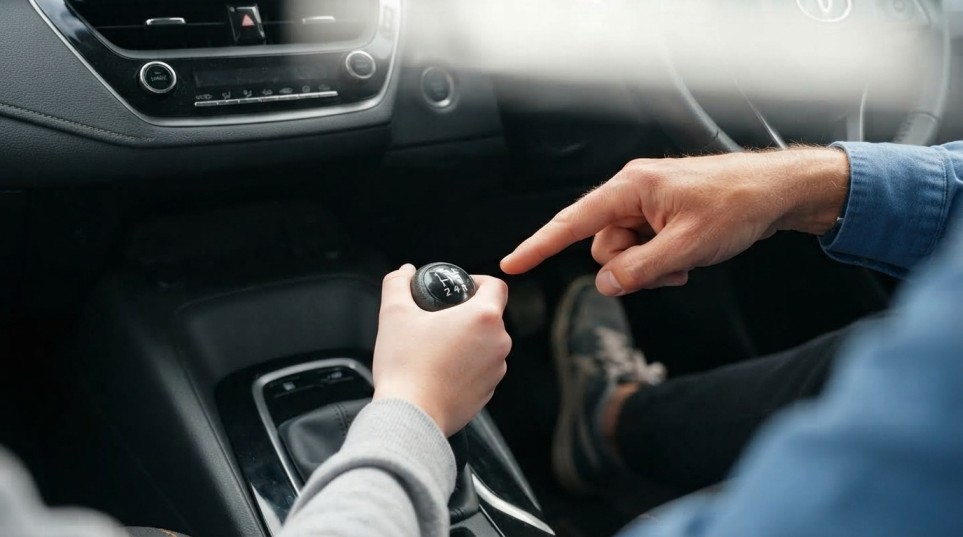
In a manual car, you’re responsible for clutch control, gear selection, and matching your gear to your speed and situation on top of everything else involved in driving. In an automatic, the car handles gear changes for you, which removes one entire layer of physical coordination from the equation.
Here’s how the two compare across the basics:
- Clutch control: manual only; this is often the trickiest skill for beginners to master
- Gear changes: manual requires active gear selection; automatic handles this on its own
- Starting and stopping: manual involves coordinating clutch and accelerator to avoid stalling; automatic is generally simpler
- Hill starts: manual hill starts require precise clutch and handbrake coordination; automatic removes much of this difficulty
- Traffic situations: manual adds extra mental load in stop-start traffic; automatic frees up attention for observation
- Vehicle control: both require good steering and braking control, but manual adds a physical skill layer
- Mental workload for beginners: generally higher in manual, at least early on
- Learning curve: a manual often takes longer to feel smooth and natural
That said, automatic isn’t automatically easier for every single learner. Some people find the reduced physical workload makes it easier to focus on road awareness from day one, while others still need just as much time to build confidence in traffic, regardless of transmission type.
How Many Manual Driving Lessons Do You Need?
Learning a manual usually follows a fairly natural progression:
- Basic vehicle controls
- Clutch control
- Moving off and stopping smoothly
- Gear changes
- Turning
- Hill starts
- Lane changing
- Intersections
- Roundabouts
- Parking
- Complex traffic situations
- Driving test preparation
Some learners get comfortable with clutch control within their first few sessions, while others need extra repetition before it feels natural. That’s completely normal; clutch control is a physical skill that improves with practice, not something everyone picks up at the same rate. The number of lessons you’ll need really comes down to how quickly you move through these stages, not a fixed lesson count.
How Many Automatic Driving Lessons Do You Need?
Learning automatic covers much of the same ground, minus the clutch and gear management:
- Vehicle controls
- Steering
- Braking
- Acceleration
- Lane positioning
- Intersections
- Roundabouts
- Parking
- Traffic awareness
- Hazard perception
- Test preparation
Because there’s no clutch or gear selection to manage, some beginners find they can focus more attention on road awareness and decision-making earlier in their lessons. This doesn’t mean automatic requires no real training; traffic awareness, hazard perception, and test-ready maneuvers still take proper practice to master, regardless of transmission.
Manual vs Automatic: Which One Usually Takes Longer to Learn?
| Factor | Manual | Automatic |
|---|---|---|
| Vehicle control | Requires coordinating clutch, gears, and pedals together | Simpler steering, braking, and accelerating only |
| Clutch/gear learning | Additional skill to master often needs repetition. | Not required |
| Beginner learning curve | Often steeper in the early stages | Often gentler in the early stages |
| Traffic management | More mental load in stop-start traffic | More attention available for observation |
| Practice requirements | May need more sessions to reach smooth control | May reach basic vehicle control sooner |
| Test preparation | Same maneuvers, plus clutch/gear execution | Same maneuvers, without clutch/gear execution |
It’s tempting to read this table and assume “automatic” always means fewer lessons, but that’s not guaranteed. Individual ability, confidence, and how often you practice between lessons often matter more than the transmission type itself.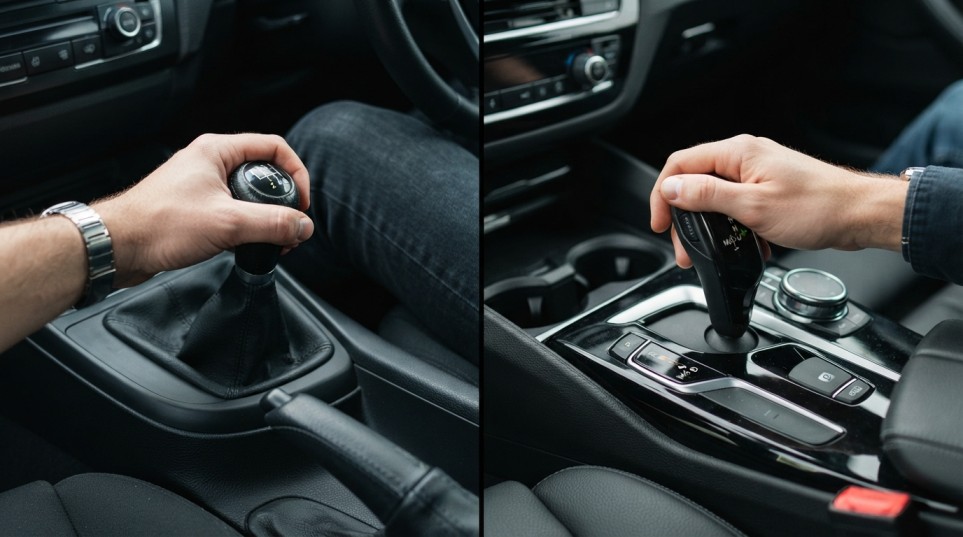
How Do You Know When You Are Ready for Your Driving Test?
Being test-ready isn’t about reaching lesson number ten or twenty; it’s about consistently demonstrating these skills:
- Smooth vehicle control
- Correct observation habits
- Safe, well-timed lane changes
- Correct signalling every time
- Confident roundabout handling
- Sound intersection decisions
- Reliable parking, including reverse and parallel parking
- Appropriate speed management
- Genuine hazard awareness
- Ability to drive independently, without prompts
- Consistent road-rule compliance
- Staying calm under pressure
If you can do all of this reliably, not just on a good day, but most of the time, that’s a stronger sign of readiness than any specific lesson count.
Does Private Practice Reduce the Number of Driving Lessons You Need?
Supervised private practice, done properly, can genuinely speed up your progress. Practicing things like starting and stopping, parking, turns, lane changes, and roundabouts between professional lessons helps skills stick, rather than being relearned from scratch each session.
Professional lessons and private practice serve different purposes, though. An instructor can spot and correct habits a supervising driver might miss, teach proper technique from the start, and structure your progress logically. Private practice reinforces what you’ve already learned. Used together, most learners find they progress more efficiently than relying on either one alone, always with a fully licensed supervising driver and only building on skills you’ve already been taught properly.
How Often Should You Take Driving Lessons?
There’s no single “correct” schedule, but a few common approaches include
- Weekly lessons: steady, manageable progress over a longer period
- Multiple lessons per week: faster progress for learners with more time and budget
- Lessons combined with private practice: professional instruction supported by supervised driving in between
- Intensive preparation before a test: a short run of closer-together lessons to sharpen specific skills before test day
Consistency tends to help more than intensity alone. Gaps of several weeks between lessons often mean recovering ground you’d already learned, while regular, spaced-out practice generally helps skills stick.
How to Get the Most Out of Every Driving Lesson
A few habits make a real difference to how much you get out of each session:
- Arrive prepared and well-rested
- Ask questions when something doesn’t make sense
- Ask to specifically practice your weaker skills
- Review mistakes honestly rather than brushing past them
- Take notes after lessons if it helps you remember feedback
- Practice between lessons where possible, with a supervising driver
- Focus on road awareness, not just mechanical control
- Follow your instructor’s feedback rather than reverting to old habits
- Avoid rushing through skills just to move on to the next one
When Should You Start Driving Test Preparation?
Test preparation shouldn’t be squeezed into your very last lesson. It works best as an ongoing focus, including:
- Understanding exactly what the test requires
- Practicing the specific maneuvers used in testing
- Building consistency across multiple sessions, not just one good run
- Identifying and working on weak areas early
- Practicing under realistic, test-like conditions
- Building genuine confidence, not just memorized routines
Starting this process a few lessons before your test date, rather than at the last minute, generally leads to a calmer, more confident test day.
Driving Lessons in Melbourne for Learners
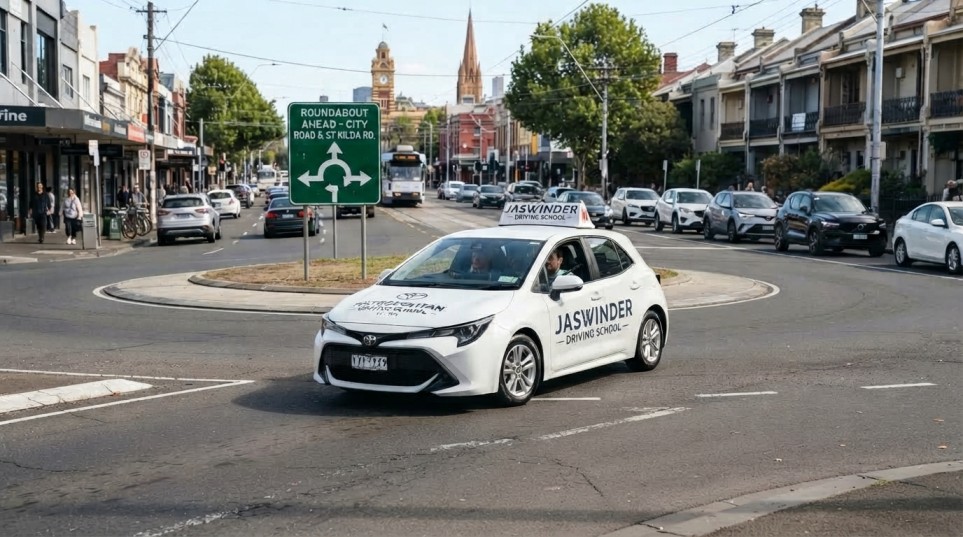
Melbourne throws a real mix of driving conditions at learners: busy CBD intersections, multi-lane roundabouts, quieter residential streets, and fast-moving main roads all within a short drive of each other. Getting comfortable across this range of environments matters more than practicing in just one type of setting.
Parking is another area where Melbourne conditions matter, from tight residential streets to shopping strip parking. Learners who get exposure to varied traffic, road types, and parking situations tend to feel more prepared when test day arrives, since the test itself often reflects everyday local driving conditions.
Learn to Drive With Jaswinder Driving School
Jaswinder Driving School works with learners across Melbourne’s western suburbs to build the vehicle control, road awareness, confidence, parking skills, and traffic awareness needed to become a safe, test-ready driver, whether you’re learning manual or automatic.
Every learner starts at a different point and progresses at their own pace, which is why lessons are structured around actual skill development rather than a fixed lesson count. If you’re weighing up manual versus automatic or just not sure how many lessons you might need, that’s exactly the kind of thing worth discussing before you book your first session.
If you’ve already been building your confidence with private practice, you might also find our guide on how many driving lessons you need in Melbourne useful for a broader look at lesson planning.
To ask questions or book a lesson, get in touch:
Phone: 0430 361 821 Email: jaswinderdrivingschool@gmail.com
Website: https://jaswinderdrivingschool.com.au/
Frequently Asked Questions
How many driving lessons does a beginner need?
It varies widely depending on prior experience, confidence, and how quickly skills develop. Progress should be measured by skill mastery, not a fixed number of lessons.
Do manual driving lessons take longer than automatic?
Often, yes, mainly because of the extra time needed to master clutch and gear control. However, individual ability and practice frequency still play a major role.
Is automatic easier to learn than manual?
For many beginners, yes, since there’s no clutch or gear management to learn. That said, traffic awareness and test-ready skills still take genuine practice in an automatic.
How do I know when I am ready for my driving test?
You’re likely ready when you can consistently demonstrate smooth vehicle control, safe observation, correct signalling, and calm decision-making not just on an occasional good day.
Can private practice reduce the number of professional lessons I need?
It can help reinforce skills between lessons, but professional instruction and supervised private practice serve different purposes and generally work best combined.
How often should I take driving lessons?
This depends on your goals and schedule; weekly lessons, multiple sessions per week, or an intensive run before a test can all work, as long as practice stays consistent.
How many lessons should I take before my driving test?
There’s no universal number. What matters is whether you can consistently perform test-relevant skills, not how many lessons you’ve completed.
Should I learn manual or automatic?
It depends on your goals, the type of car you’re likely to drive long-term, and how comfortable you feel managing extra controls. Both require proper instruction to reach a test-ready standard.
Conclusion
There’s no magic number of driving lessons that works for every learner, and no transmission type that guarantees a faster path to your license. What matters is genuine skill progression, vehicle control, observation, decision-making, and confidence built through a mix of quality instruction and consistent practice.
If you’re ready to start lessons or still deciding between manual and automatic, get in touch with Jaswinder Driving School to talk through what would work best for you.